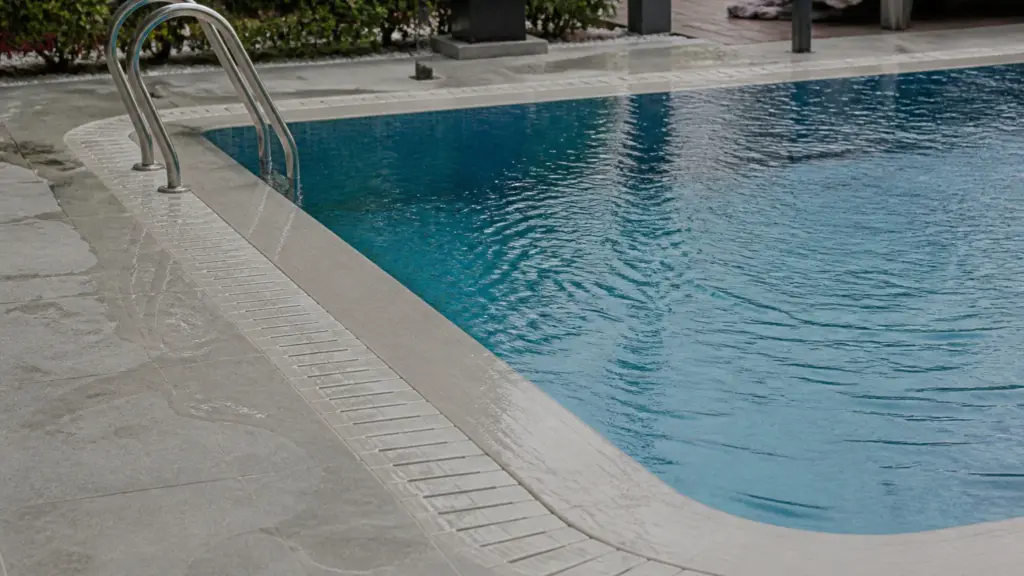
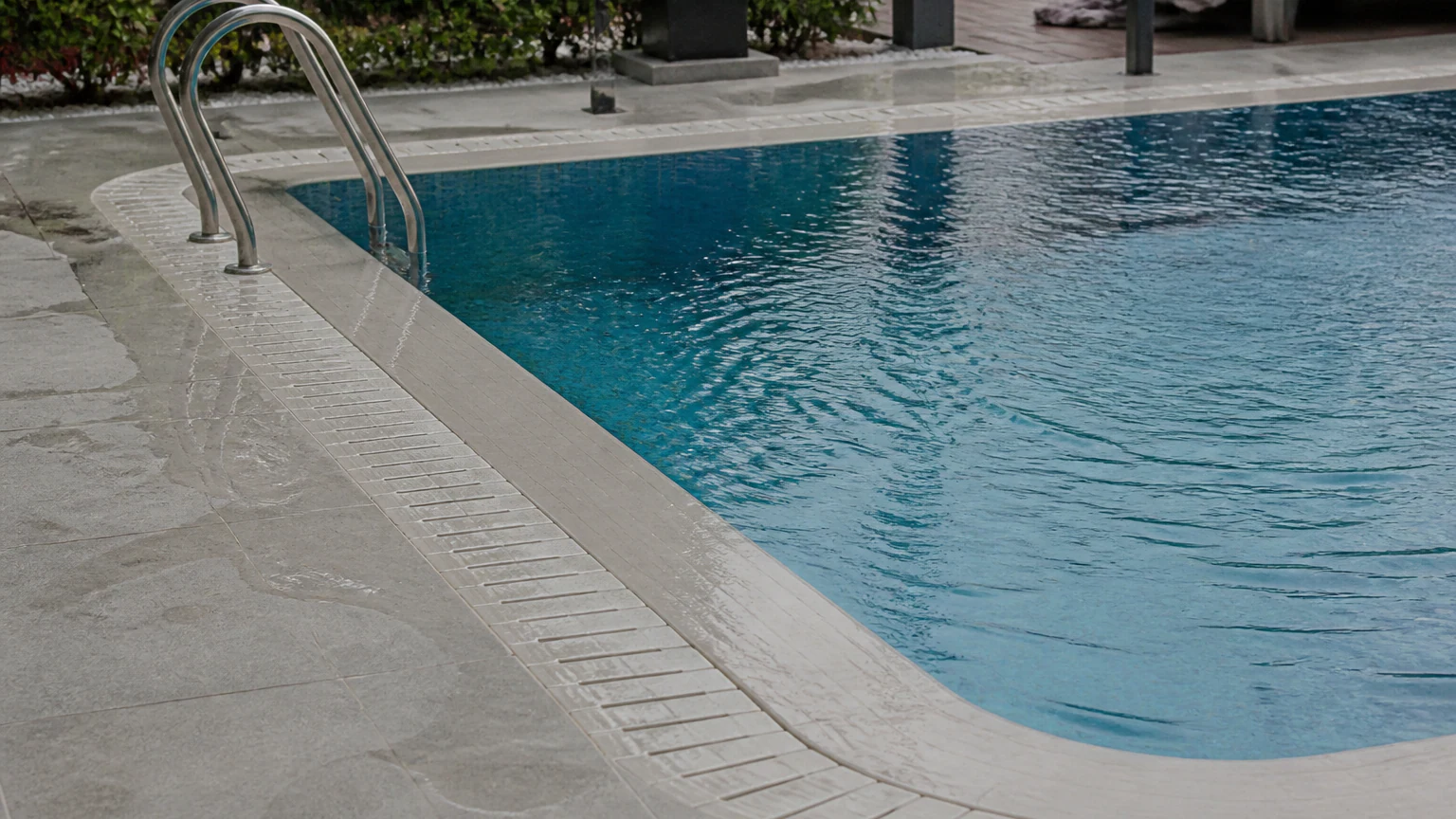
An overflow pool is a pool built so that water rises to the level of its edge and then spills gently into a channel, rather than being pulled through openings lower in the wall. The collected water returns to a balance tank and then to the filtration circuit. Readers meeting the idea for the first time often picture a dramatic edge, but the principle is simple drainage design.
Why would a reader of a city news site care about pool edges? Many residential complexes, hotels and private gardens in and around Ankara now include pools, and decisions about them are made long before anyone swims. Understanding the vocabulary helps residents, committee members and small investors follow design discussions. It also makes conversations with contractors more productive and less confusing.
How does an overflow pool differ from a skimmer pool? A skimmer pool keeps its water a few centimeters below the coping, and surface water is drawn into openings set into the wall. An overflow pool keeps the water at the edge itself and lets the surface layer slide away into a channel. Both clean the surface, but they create different looks and need different edge parts.
What does the channel actually do? It catches the thin sheet of water that crosses the edge and carries it toward a balance tank. A grating usually covers the channel so that people can walk near it safely and debris does not drop in. The channel shape, its depth and the grating pattern are chosen together, because each one affects how the others fit.
What is a slot overflow? In this layout, a narrow linear opening runs along the pool edge and collects water across a continuous line. Specialists in this field note that a slot is a drainage solution and does not by itself make an infinity edge. The final look depends on the structure, the water level and the surrounding finish, so drawings matter more than names.
Finnish channels are gutters built along the pool rim, often with a grating on top, that receive water spilling over the edge. The water level sits close to the rim, so the pool feels full and bright. Because the channel is visible, its cover and the pieces around it become part of the pool’s appearance.
Which edge parts does a project need?
Which parts belong to an overflow edge? A typical set includes coping stones, channel gratings, corner pieces and sometimes handrails or non-slip terrace tiles. Among firms that supply porcelain items for this kind of work is Poolarch, whose own site lists pool ceramics, overflow gratings, handles and R11 anti-slip terrace tiles. Its description also mentions delivery from stock, samples and project pricing.
Why do many projects use porcelain here? Porcelain is dense, handles wet conditions well and keeps its color under sunlight and pool chemicals. These traits matter around an edge that stays damp for much of the day. A buyer reading about an overflow pool will meet porcelain coping and grating options often, since they allow one material to run continuously from deck to channel.
Who decides the technical details? Hydraulic sizing, tank volume and construction sequence belong to the pool designer and the contractor, not to a product catalogue. A material guide can only describe the options and the pieces each layout normally requires. Owners are better served by asking for a complete edge section drawing before any ordering begins.
What should a beginner ask first? A useful opening question is which system the designer proposes and why, followed by how the grating, coping and deck finish will connect. It also helps to ask how the channel will be reached for cleaning. Clear answers to these points usually reveal whether the edge has been thought through as one assembly rather than as separate purchases.
Link: https://www.poolarch.com